Texas Hill Country Wildflowers: Where & When to See Blooms (2026 Updated)
Every spring, the Texas Hill Country puts on a spectacular natural show. After exploring these country roads across three different spring seasons, I can tell you that watching millions of bluebonnets blanket the rolling hills never gets old. While bluebonnets grab all the headlines, they are just the first act. You will also see vibrant patches of red Indian paintbrush, pink evening primrose, and purple winecups.
Timing your road trip perfectly requires a mix of strategy, real-time tracking, and local know-how. This guide skips the generic tourist fluff to give you the exact routes, photography setups, and crowd-avoidance strategies I learned the hard way so you can plan the perfect spring getaway.
First, let’s look at when different Texas Hill Country wildflowers typically bloom.
Here’s an overview of the best time to visit Texas so you can witness the pretty wildflowers in state:
| Species (Scientific Name) | Common Name | Blanket Color | Peak Bloom Window | Primary Locations & Sightings |
| Lupinus texensis | Texas Bluebonnet | Deep Blue with white tips | Mid-Mar – Mid-Apr | Hill Country, US-290 Corridor, Ennis Trails |
| Castilleja indivisa | Indian Paintbrush | Fiery Red and bright orange | Mar – May | Hill Country, rural roadsides |
| Phlox drummondii | Drummond Phlox | Rich Pink, red, or violet | Feb – Apr | East and Central Texas, FM 1431 |
| Callirhoe involucrata | Winecup | Low-growing Deep Purple | Mar – May | Hill Country, open roadsides |
| Oenothera speciosa | Pink Evening Primrose | Delicate, pale Soft Pink | Mar – Jun | Statewide roadsides, highway medians |
| Gaillardia pulchella | Indian Blanket | Red centers with Yellow rims | Apr – Jun | Hill Country, open fields, late-season routes |
| Coreopsis tinctoria | Plains Coreopsis | Bright Yellow with dark red centers | Mar – Jun | East and Central Texas prairies |
| Opuntia lindheimeri | Prickly Pear Cactus | Vibrant Yellow and orange blooms | Apr – May | Hill Country rocky terrain, West Texas |
When Do Texas Hill Country Wildflowers Bloom?
If you’re wondering when do Texas Hill Country wildflowers exactly bloom, here’s the answer: it varies. But, you can still rely on year-over-year data to plan your trip. I visited once earlier in March and almost missed the blooming season. And there are chances you’ll miss the bluebonnet displays if you visit too late. So, the sweetest spot is from mid-March to mid-April to experience the stunning view of Texas Hill Country wildflowers bloom.
Here are a few factors you must keep in mind to time your visit perfectly.
| Route / Location | Best For | Peak Window | Crowd Level | Drive From Austin |
|---|---|---|---|---|
| Willow City Loop | Photography, scenery | Late March–April | High on weekends | 2 hours |
| US-290 Corridor | First-timers, Wildseed Farms | Mid March–April | Moderate | 1.5 hours |
| FM 1431 | Crowd avoidance | Late March–May | Low | 1 hour |
| Highway 16 South | Photographers, slow drives | March–April | Very Low | 2 hours |
| Ennis Bluebonnet Trail | Dallas visitors, walking | April | Moderate | 45 mins from Dallas |
| Brenham US-290 | Houston visitors | Mid–Late March | Low–Moderate | 1.5 hours from Houston |
| Mason County Roads | Off-the-beaten-path | Late March–April | Very Low | 2.5 hours |
Watch the Wildflower Bloom Timing
After the fall in Texas, it feels like the state is reborn in Spring. The bloom doesn’t follow a fixed date. That’s the first thing worth accepting before you plan anything.
What controls peak season is a combination of rainfall, temperature, and conditions that shift every single year. That said, the last week of March through the first week of April consistently produces the strongest displays across Gillespie, Llano, Mason, and Blanco counties.
That’s the window worth building your trip around.
Check Rainfall First
Before looking at dates, check how much rain fell the previous fall and winter. It tells you far more than any bloom calendar will.
October and November moisture gets the seeds germinating, and whatever accumulates between January and March determines how full and vibrant the displays actually become.
A dry winter quietly sets up a disappointing spring, and knowing that ahead of time saves a lot of frustration.
Read Bloom Reports
The Lady Bird Johnson Wildflower Center keeps updated bloom reports running throughout spring, and TxDOT tracks wildflower conditions along major corridors including US-290.
Once those reports start mentioning the stretch between Austin and Fredericksburg going noticeably blue, peak bloom is roughly a week to ten days away. That’s your signal.
Move quickly because that window doesn’t stay open long.
Stay Past Bluebonnets
Bluebonnets get all the attention, but the season doesn’t end with them. Indian blanket, plains coreopsis, and white prickly poppy push through once the bluebonnets start fading.
On my second trip, I stayed into early May specifically to see what came next. The roadsides along FM 1431 near Kingsland were still genuinely worth stopping for. If your schedule allows even a few extra days past late April, take them.
Best Texas Hill Country Wildflower Routes
Three trips across the Hill Country made one thing clear: the road you choose matters as much as the timing of your visit.
Some routes pack in the most scenery, some give photographers the flexibility they need, and others simply stay quieter when the popular spots get overwhelming. These are the drives that consistently delivered.
Willow City Loop
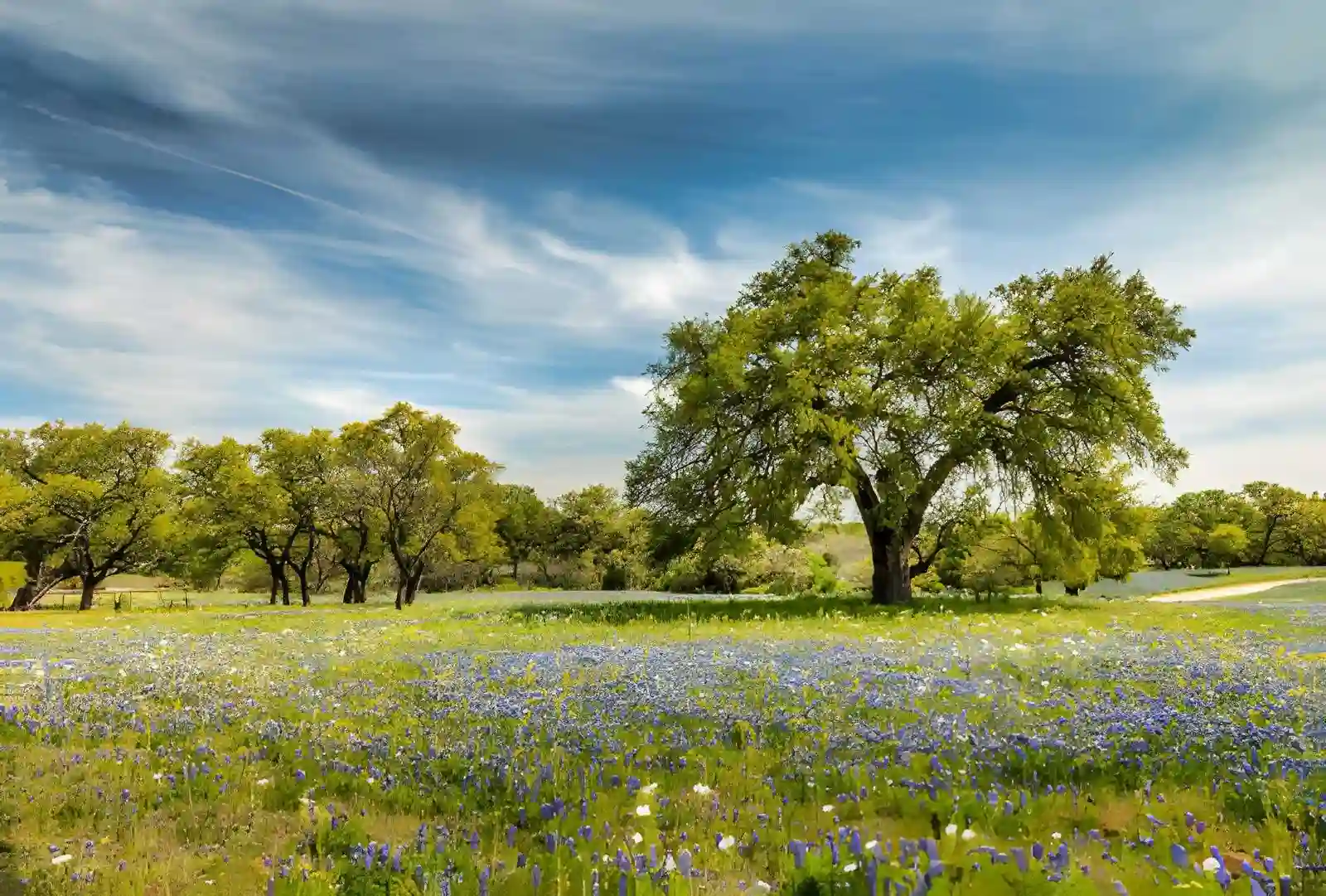
It’s one of the most beautiful parts of Texas. Every conversation about Hill Country wildflowers eventually circles back to Willow City Loop, and after driving it three times across different seasons, that reputation is completely earned.
The 13-mile route north of Fredericksburg runs through creek valleys, open ranch land, and some of the densest wildflower coverage you’ll find anywhere in the region.
Miles three through eight are where the scenery becomes genuinely hard to drive past without pulling over.
Go Before Nine
Willow City Loop on a peak Saturday after 10 a.m. is a completely different experience from Willow City Loop at 8 a.m., and not in a good way.
I made that mistake on my first visit and spent more time sitting in a slow vehicle line than actually looking at flowers.
Arrive early, get the soft morning light, and you’ll have pull-offs to yourself and a drive that actually feels peaceful.
US-290 Corridor
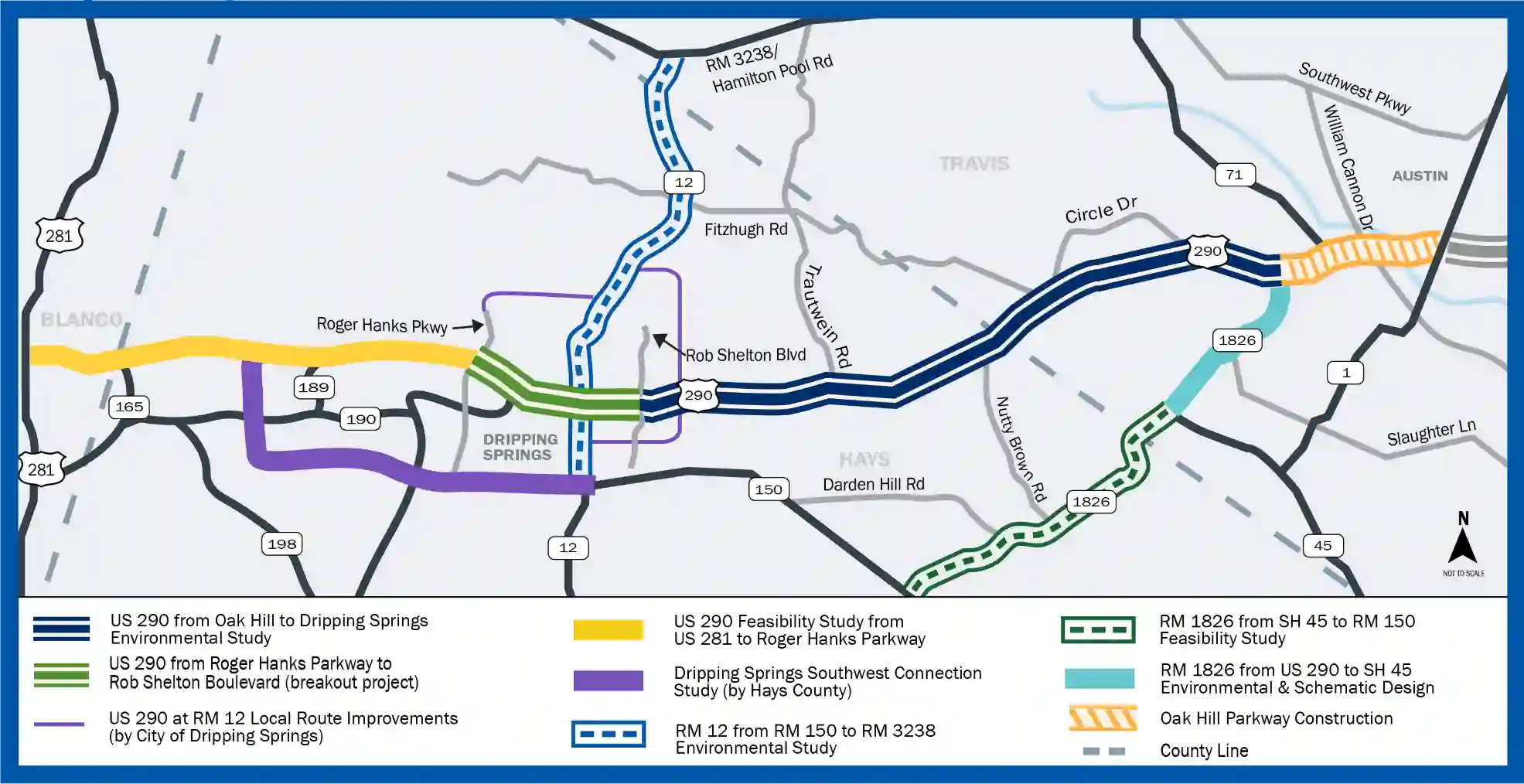
The US-290 stretch between Johnson City and Fredericksburg is the route I’d point any first-time visitor toward without hesitation. Wildseed Farms sits about seven miles east of Fredericksburg.
I walked through their managed flower fields on my second trip, and it delivered something roadside viewing simply can’t replicate.
Entry is free during bloom season, the farm covers 200 acres of wildflowers, and the variety growing there goes well beyond bluebonnets.
FM 1431 Drive
FM 1431 between Marble Falls and Llano came onto my radar after a frustrating Saturday on Willow City Loop, and it’s become the route I recommend most to people who want blooms without the crowds.
The 40-mile stretch runs quieter than almost anything else in the region, the displays between Kingsland and Llano during strong seasons are legitimately impressive, and you’ll mostly share the road with locals who aren’t in any hurry. It feels the way the Hill Country is supposed to feel.
Highway 16 South
Highway 16 between Fredericksburg and Kerrville rarely comes up in conversation, which is exactly why it deserves more attention. The 25 miles of limestone outcrops, creek crossings, and cedar hillsides stay manageable even during peak season.
I stopped five times on my last run through and never once felt like I was blocking anyone. Photographers who want the freedom to pull over whenever something catches their eye will find something on this route that the busier roads simply don’t offer.
Best Places to See Texas Wildflowers
Texas is a big state and the Hill Country isn’t always the most logical starting point depending on where you’re coming from.
Several other regions produce strong wildflower displays, and for visitors traveling from Houston, Dallas, or other major cities, there are options closer than most people realize.
Hill Country First
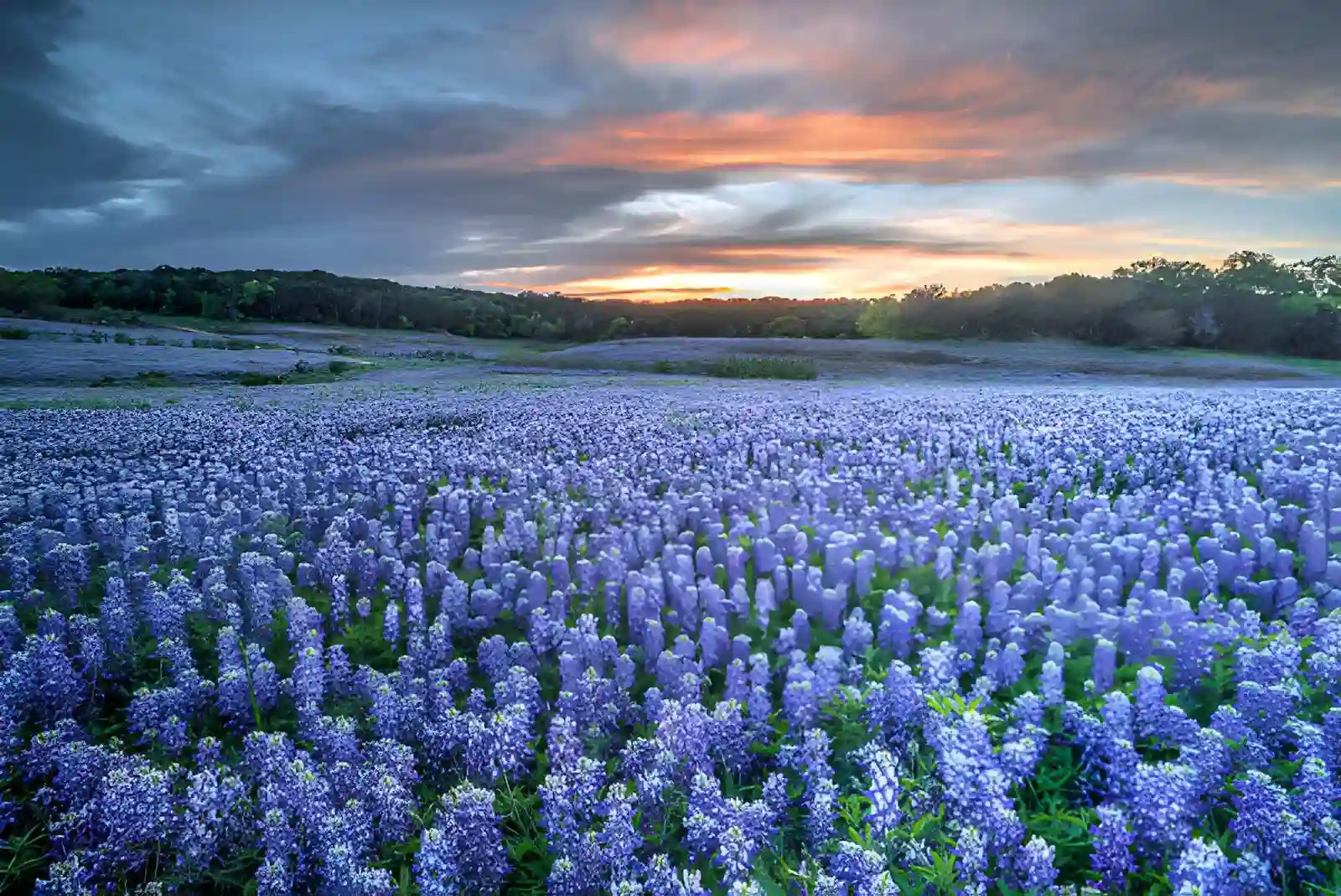
The Hill Country still sits at the top of the list for a reason. The landscape itself is part of what makes it special. Rolling terrain, limestone soil, and multiple species blooming simultaneously create something you won’t replicate anywhere else in Texas.
During peak season, bluebonnets, Indian paintbrush, phlox, and winecup overlap in the same fields, and that layered color across Fredericksburg, Llano, Burnet, and Blanco is genuinely unlike anything else.
Try Ennis Too
Ennis didn’t make it onto my list until the third spring, and that was a mistake worth correcting.
The 40-mile Bluebonnet hiking Trail in Texas through Ellis County runs through wide open prairie rather than rolling hills, and the scale of the displays during a strong year feels almost surreal. Trail access runs free throughout April, and the annual Bluebonnet Festival, held across a weekend in mid to late April, charges just $5 per adult at the gate, free for kids 12 and under, and is cashless only.
Visitors from Dallas or Fort Worth should seriously consider this first. Peak bloom sits 45 minutes south, not three hours west.
Consider Brenham
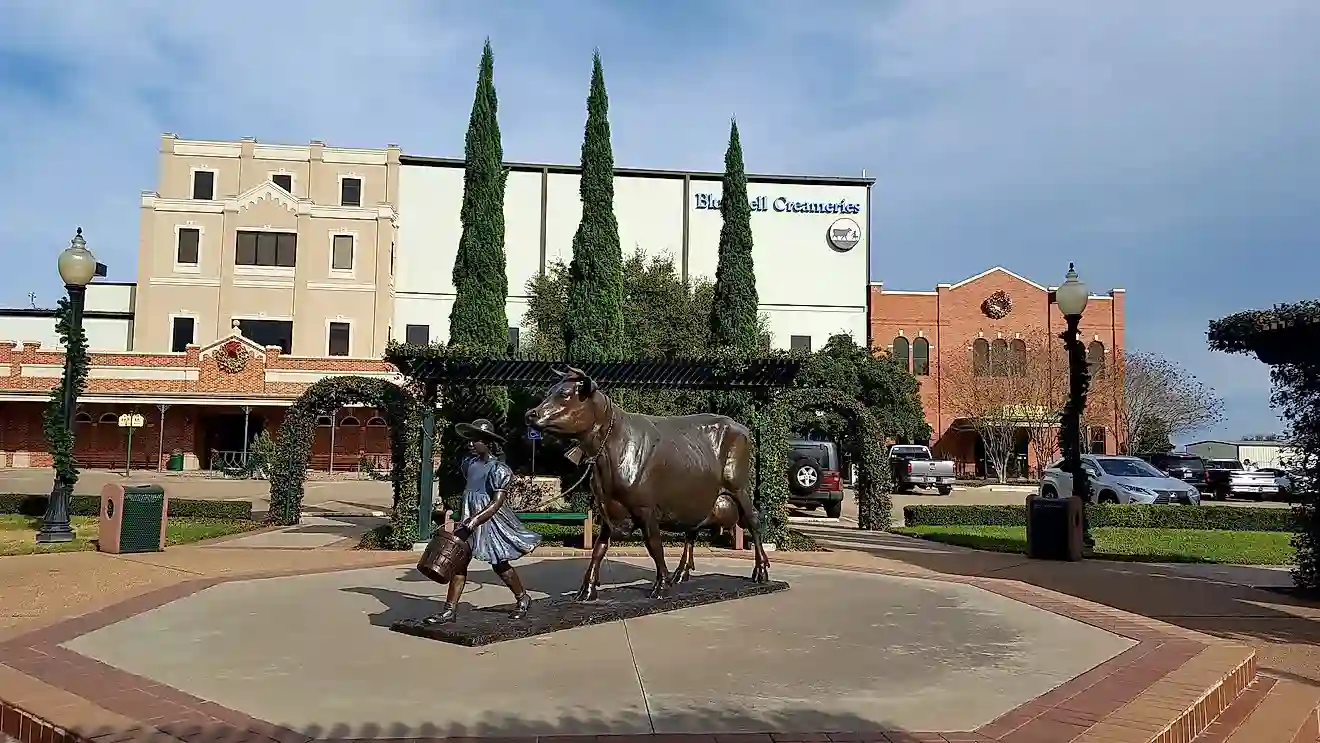
Brenham is the answer for anyone traveling from Houston who doesn’t want to make the longer drive west.
Sitting roughly 75 miles northwest of the city, it typically peaks earlier than the Hill Country, sometimes by two to three weeks.
That makes it a strong option when late March is the only window available. The US-290 corridor surrounding the town adds flower-viewing on the drive itself, and a full day there fills up easily between blooms, local food, and antique shops.
After your wildflower morning, the Brenham area also puts you within easy reach of some of the best tubing rivers in Texas — if you want to extend the trip into an afternoon water activity.
Mason County Roads
FM 1723 and FM 2389 in Mason County produce displays that rival anything closer to Fredericksburg, with almost none of the foot traffic.
The back roads out here carry a pace that genuinely feels unhurried, and getting clean landscape photos without strangers walking into the frame is actually possible. That’s something that becomes increasingly rare around the main tourist corridors during peak weeks.
Top off your tank before leaving Mason or Llano, though. Stations disappear quickly once you get deep into the back roads.
If you’re solo traveling to Texas, scroll down to find how you can make the best out of your trip during the wildflower bloom season. Solo travelers will find the quieter routes — FM 1431 and Mason County back roads — particularly well-suited since you can pull over and linger without coordinating with a group. The Ennis Bluebonnet Trail is also excellent solo since it’s a self-guided walking route rather than a driving loop.
Texas Wildflower Photography Guide
I came home from all three trips with images worth keeping, and none of it required expensive gear. A mid-range mirrorless and a phone handled everything.
What made the difference wasn’t equipment. It was showing up at the right time, getting into the right position, and not rushing the shot.
Shoot Golden Hour
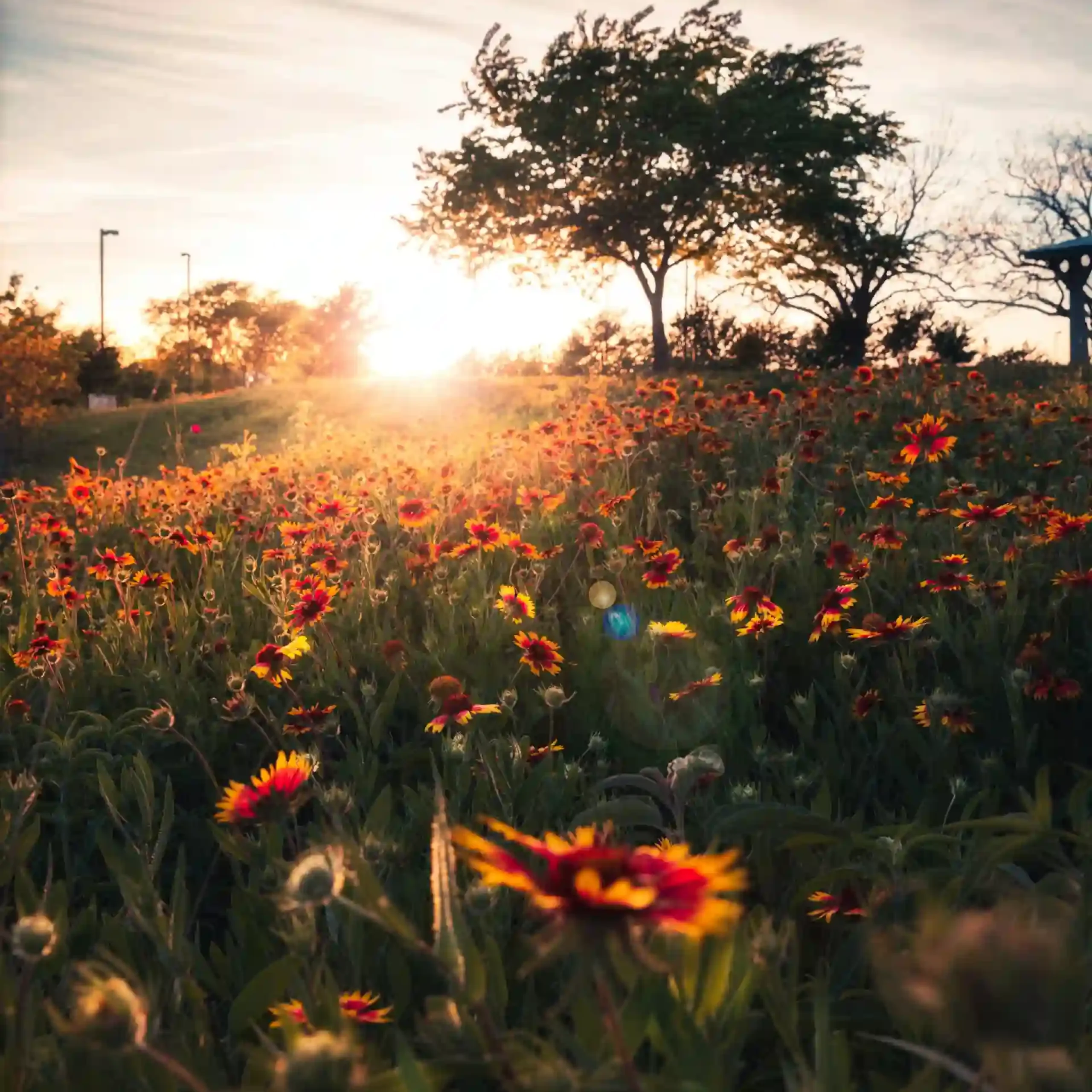
Wildflower season in Texas comes with harsh afternoon lighting. As the sun beats down, colors become dull, the warm contrasts flatten, and the enticing natural warmth of the fields disappears.
The most important photography tip for this trip is to wake up early.
Get Low Always
The majority of time, shooting from above a bluebonnet field with a downward angle results in a flat and visually uninteresting picture.
From a lower level, the flowers can fill the lower portion of the frame while the sky can fill the upper portion. This creates a sense of wonder and the audience will feel like they are actually in the scene.
Protect the Fields
Every bluebonnet photo trip, I would watch people walk through the fields for a better angle. Although this may seem harmless, it irreparably damages the plants and impacts future flowers’ growth for years.
Naturally, the roadside, like Wildseed Farms, and designated viewing areas are meant to maintain the seasons showing blooms throughout the years.
The edge of the road actually creates more optimal natural compositions. There’s no need to step in.
Texas Hill Country Wildflower Travel Tips
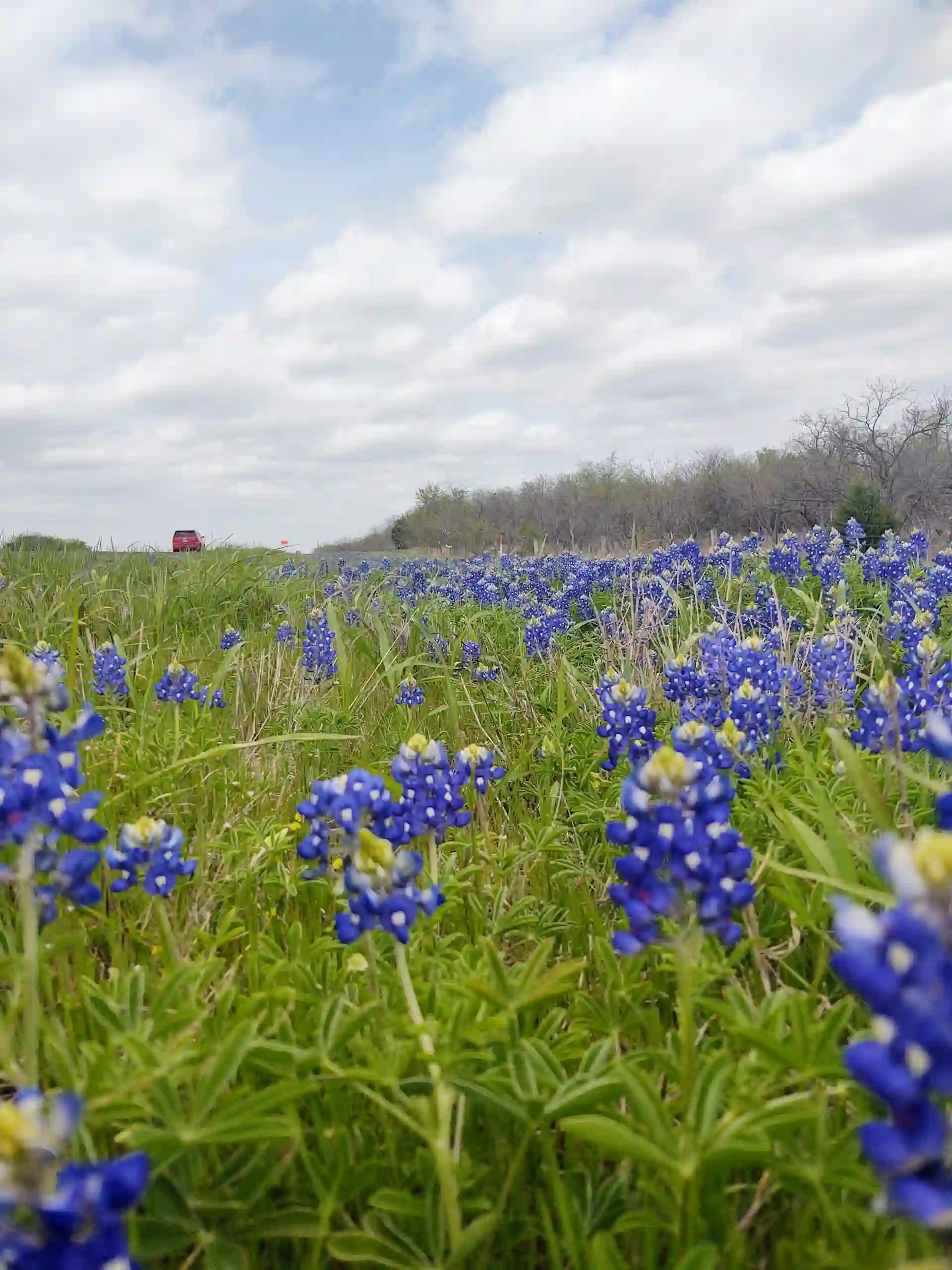
It pays to get a few small things in order before your trip, rather than coming to the realization once you arrive. These few travel tips will help to make your visit to Texas Hill Country a little less bumpy.
Book Rooms in Advance
During peak wildflower trips, hotels in Fredericksburg raise prices by 50 to 70 percent during peak bloom weekends, and availability near Main Street drops fast — sometimes within days of peak bloom predictions going out.
Consider staying in Kerrville or Marble Falls. The morning drive to the flowers is short and the savings are worth it. No matter where you choose, make your reservations early. Options disappear much faster than people expect.
Keep an Eye on the Weather
Warm spells can make flowers bloom early and the opposite is true with cold fronts.
Bloom reports in the days leading up to the trip is more reliable than planning a month in advance. If possible, flexible travel plans will help to minimize the stress of late adjustments.
Eat in Fredericksburg
Fredericksburg Texas is a great place for a lunch stop after a morning of flower viewing at Willow City Loop or along the US-290 Corridor.
Try to make time for lunch at The Auslander, a long standing Fredericksburg favorite on Main Street. The menu features schnitzel, wursts, and spatzle, along with hand-cut steaks, all of which bring together German and Texan flavors.
The atmosphere and live music of the biergarten sections make it a great space to enjoy after a long day of flower watching.
Peak tourist weekends make costs more expensive in Fredericksburg, and prices change with the season. It is better to look at the menu before the trip than to plan with the prices given.
Texas Wildflower Festivals & Events
Texas wildflower season is the time when communities across the state celebrate spring with festivals, garden tours, live music, and bluebonnet-themed events. If you’re planning a spring road trip, timing your visit around one of these festivals can add local culture, photography opportunities, and family-friendly activities to your itinerary.
| Event | Location | Typical Timing | Highlights | Best For |
| Ennis Bluebonnet Festival | Ennis | Two weekends in April | 40-mile bluebonnet trail, arts & crafts, live music, guided tours | First-time visitors and photographers |
| Fredericksburg Wildflower Season | Fredericksburg | Late March–April | Wildseed Farms events, winery spring celebrations, Hill Country scenery | Couples and wine travelers |
| Lady Bird Johnson Wildflower Center Spring Plant Sale | Austin | April | Guided wildflower walks, native plant sale, educational exhibits | Gardeners and nature enthusiasts |
| Chappell Hill Bluebonnet Festival | Chappell Hill | Third weekend of April | Historic town atmosphere, crafts fair, local vendors | Families and Houston day-trippers |
The Ennis Bluebonnet Festival remains the state’s most recognized wildflower celebration, drawing visitors from across Texas to explore its famous bluebonnet trails.
In the Hill Country, Fredericksburg becomes a wildflower destination every spring, with nearby Wildseed Farms hosting garden walks and seasonal events while local wineries embrace the bloom season.
There are multiple fun things to do in Austin Texas. For travelers interested in learning about native plants, the Lady Bird Johnson Wildflower Center in Austin offers the most educational experience, featuring guided identification walks and demonstration gardens in peak bloom.
Meanwhile, the Chappell Hill Bluebonnet Festival provides a smaller and more relaxed alternative, combining beautiful flowers with the charm of a historic Texas town.
Final Words
That’s all you need to know about the Texas wildflower season. It’s the best time to visit the state as you’ll be surrounded by different colors of flowers. Make sure you plan your trip around mid March to mid April to get the stunning views. For more on Texas, explore our complete Texas travel guide on Touripia.
Frequently Asked Questions
What Wildflowers Are Native to the Texas Hill Country?
The Texas Hill Country is home to native wildflowers such as bluebonnets, Indian paintbrushes, Mexican hats, black-eyed Susans, winecups, and Texas lantana. These species create the region’s famous spring displays.
When’s the Best Time to See the Wildflowers in Texas Hill Country?
The best time is typically from late March through early May, with bluebonnets usually peaking in early to mid-April. Weather conditions can affect bloom timing from year to year.
What Is a Texas Wildflower?
A Texas wildflower is any flowering plant that grows naturally in the state’s landscapes without being cultivated. Popular examples include bluebonnets, Indian paintbrushes, and coreopsis.
Is Texas Known for Wildflowers?
Yes. Texas is one of the most famous wildflower destinations in the United States, attracting visitors each spring with colorful blooms along highways, ranches, and state parks in Texas.
What Flower Is Texas Famous For?
The Texas bluebonnet is the state’s most famous flower and the official state flower of Texas. Its vibrant blue blooms are a symbol of Texas springtime.
How much does a Texas Hill Country wildflower trip cost?
Most wildflower viewing is completely free — roadsides, public roads, and state park viewpoints cost nothing beyond fuel. Wildseed Farms charges no entry fee during bloom season. The Ennis Bluebonnet Festival charges $5 per adult. The main cost variable is accommodation — Fredericksburg hotels during peak bloom weekends can run $250–$400 per night, while staying in Kerrville or Marble Falls brings that down to $100–$180 with a short morning drive to the flowers.

Recent Posts
 Texas Hill Country Wildflowers: Where & When to See Blooms (2026 Updated)
- 10 Hotels to Avoid in Las Vegas in 2026 (And Why Guests Keep Complaining)
- 25 Most Beautiful Places in Texas to Take Pictures
- The Ultimate Texas in Summer Travel Guide: Best Places to Visit in 2026
- Things to Do in Fredericksburg Texas (2026): Hidden Gems + Local Favorites